
From Peacocks to Penguins: Chloe Chapin on the Sartorial Revolution
How the Plain Suit Helped Fashion Modern Democracy

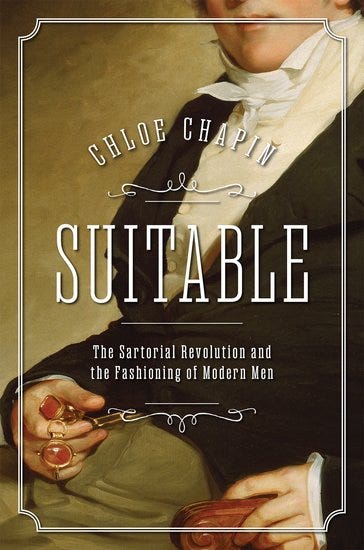
In fashion history, it is commonly taught that the appearance of more dour, plain dark suiting for men emerged out of the Republican influence of the French Revolution, but what if, in fact, that impulse aligns with the American Revolution, almost twenty years earlier? That’s what fashion historian Chloe Chapin posits in her new book, Suitable: the Sartorial Revolution and the Fashioning of Modern Men (Oxford University Press, 2026). Both revolutions were connected through Enlightenment ideals of liberty and a rejection of tyranny, which brought with them a renunciation of over-the-top court fashions, but as Chapin shows, this “Sartorial Revolution” started much earlier than previously discussed and had its impetus in the American project. As she states in her introduction, Suitable looks at how:
Something big changed in American culture when white men adopted plain dress in the spirit of a republican government based on new ideas of equality. At that time, suits were already a clear signal of masculinity, but when they also came to symbolize democracy, they became a visual shorthand for both the new ideas and the people who were working those ideas out.
As they tried out new ideas around equality, both American men and women during the Revolutionary War years rejected the bright colours, expensive imported fabrics, and constantly changing fashions that arrived by boat on Parisian fashion plates (“Peacocks”), instead turning to simply cut garments in dark, locally produced fabrics (“Penguins”). When later, in the early 1800s, women’s dress began to change again—finding its way back to the perpetual shifts of fashion—men’s clothing did not. As Chapin explains, this marked a key change in the meaning of fashion: whereas before fashion was used to mark class, now it marked gender.
Suitable is a fascinating and eye-opening look at an era, between 1775 and 1850, that is often exhaustively studied in school in terms of politics, but never from this angle. All of us have walked by many walls of portraits of white men in identical dark suits—whether American presidents from the early 1800s or corporate presidents from the 1990s—but until now no one has asked why and how black suits became the only thing men wear in professional environments.
By the mid-nineteenth century, a particular kind of clothing—the plain, unchanging (and therefore, by its own rules, not “fashion”) style of the woolen suit—visually signaled men across the Western world to be to be rational, enlightened, and modern subjects. When men marked themselves as no longer a part of fashion by their suits, they marked everyone else as fashionable; that is, excluded from the new modernity defined by the suit, and therefore frivolous or old-fashioned.
Though Chloe and I have a lot of overlap in our studies (we attended FIT’s MFA Fashion and Textiles program a year apart) and friends, we didn’t meet until last year when we were in a fashion history writing group together. As we discuss below, she began her career in art and the theatre, finding her way to fashion history through costume design. This grounding in the body and in making clearly informs her approach to research and in the way she has written this book—providing a much richer, more embodied understanding of economic, technological, and political history she covers. After getting her second master’s at FIT (her first was an MFA in Design from Yale School of Drama), she went on get her PhD in American Studies at Harvard. Chapin now works at Harvard as Assistant Director for Course Development at the Derek Bok Center for Teaching & Learning. Below is my conversation with Chloe about all things suits, fashion history, and more.
Suitable is now available on Bookshop, Amazon, and wherever books are sold.
We spoke for over two hours so this interview has been rather heavily edited for length and clarity.
Laura McLaws Helms: Can you tell me a bit about your background? I know you started as a costume designer.
Chloe Chapin: I would say even before being a costume designer, I just was a maker. I was always a theater kid. I acted in stuff, did summer theater, stuff like that. My dad was a wood and metal shop teacher, and so I had just grown up around tools. I loved working backstage, so I worked as a dresser for a long time at my local Shakespeare company. Ran the board, the sound board, the lighting. I just loved the lifestyle. Then, I went to college and given the weird tiny little art school that I went to, I just happened into this track of the illustrators and the design program, which was a really substantive training program. It was all life drawing, so that was a good fit for thinking about costumes in a new way too.
Then, I went to grad school, and then I moved to New York. New York is hard when you don’t have other sources of income. I just was hustling for 10 years. Anything that I could do to pay the rent. Sometimes that was doing Broadway musicals, where I got paid a lot of money, but all that money went straight out the door, because that job is so hard, that I would buy every meal, and run out of laundry, and had to go buy new underwear, because I didn’t have time to go to the laundromat. It just was like all the money that was coming in was going out, because the life was so hard. A lot of it was designing my own stuff more off-Broadway and just cobbling other stuff together. I did crafts for Victoria’s Secret shows, and worked with friends who were doing window displays, and just whatever I could get my hands on, including starting to teach.
I started teaching at FIT, a couple of fashion design courses. It was through that, that I just really started thinking more about how much I love doing research, and I love the history part of things. When you freelance, there’s so much flexibility, but the trade-off is, you often don’t feel like you have a whole lot of agency where I could say, “No”, to stuff, except that I couldn’t afford to saying, “No”, to stuff. I started thinking about PhD programs, which I had no idea what that meant. I had only ever been to art school. I did not know what the discipline was.
I already had a master’s degree, but I could do the FIT program for free, because I was teaching there, which was amazing. I thought, “I’ll do it for a semester. If I decide that footnotes are stupid, then I’ll just be an artist forever.” If I like it, then it would prepare me to have a writing sample to apply for a regular PhD program, which I didn’t have anything like that. I never had to write anything in my life. I had no idea what academia was. I only learned in hindsight. I didn’t even know how little I knew. I was looking at some of the more fashiony PhD places like Courtauld and Bard in art history and decorative arts kind of programs. For some reason, that just didn’t feel right to me.
I thought about history, but then I was like, “You could go anywhere. How would I choose?” That first year that I started at FIT, all the books I read that just lit my brain on fire. I loved reading trade nonfiction books. They were all written by people who taught at Harvard. I didn’t see it like a sign from the universe or anything; I just thought like, “Oh, this is interesting.” I reached out to a couple of them in the history department. They both said, “Well, you probably won’t get into the history department, because you don’t already have a degree in history, but you should look at the American Studies program.” I took the train up to Boston on a day off from theater and met with the person who was the chair at the time, which was a rotating position. It was an art historian, who was very interested in makers. She ended up becoming my dissertation advisor. It all felt like stumbling around in the dark. This was never a trajectory that I had in mind.
Laura: That’s amazing. Now, you’re a fashion doctor. In your preface, you talked about how this project originated with one question. Can you talk to me a little bit about that question, and how that question basically reshaped your life?
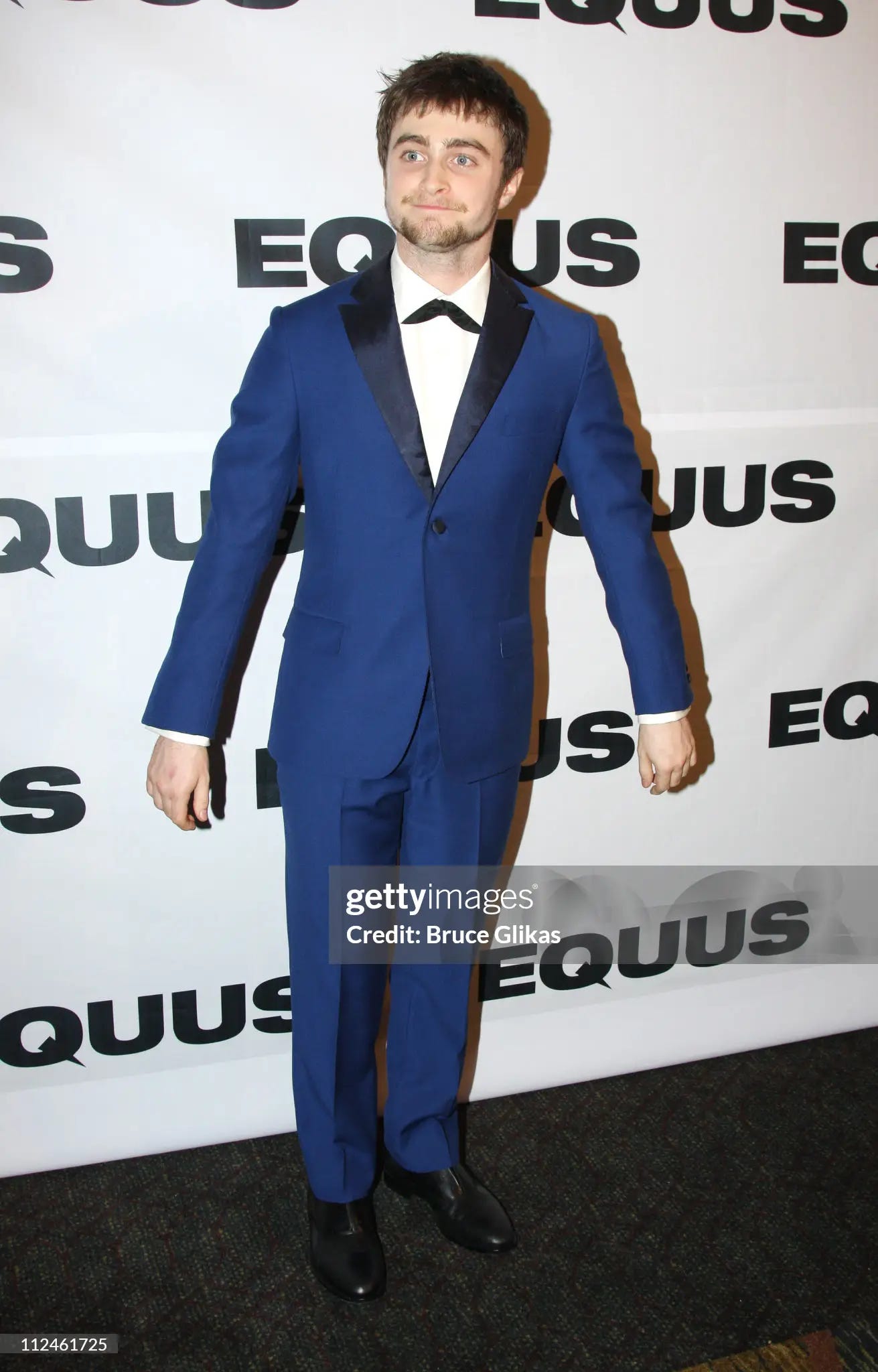
Chloe: I’ll say that there’s really two moments that got me interested in thinking about this. The first one was a conversation I had with Daniel Radcliffe on the opening night party of Equus, which was the show I designed on Broadway. He was naked in the show, but he did wear jeans, and I think a gray polo shirt or something. Also, he was one of the early celebrities that figured out that, if he wore the same thing every day, then the paparazzi wasn’t as interested, because they couldn’t sell the photos, because it all looked like the same day. I just was used to this. He was 19 at the time. He was a kid, and at the height of his fame. Seeing him all decked out in this midnight blue tuxedo at the opening night party was so exciting. We were just chatting about it. He was the one who told me about the aristocratic English history, where the Prince of Wales started wearing midnight blue tuxedos, because he was the first widely photographed royal. He was a flashy dresser, and he liked his suits. He found that blue photographed better. Then, it became this aristocratic sort of in thing of knowing how to spot the midnight blue.
I did a couple of projects about suits. In the FIT program, in the exhibition class, we had to choose something to do an exhibition on, so I did mine on James Bond and tuxedos. I made a couple of videos where I linked, cut together all the different instances of James Bond wearing a white dinner jacket. Then, a couple of years later, I was doing research for this production, which I wasn’t the designer for, so that meant that I could spend more time doing research. It was the opera La Traviata, where the first act is a big party, and the question was, what should the male chorus be wearing? Is this standard white tie, or are there some sort of variations? Really, the question at the time was, are we going to have to build stuff? Because it’s always a budget question first more than anything else.
As a costume designer, certainly, probably also as a historian, you develop this mental database of images. I was scrolling back in time and thinking, “Did they all wear white ties and white vests at that point, or were they wearing black vests and black ties?” I couldn’t really figure that out in my mind. I also couldn’t really, in my mind, differentiate between the difference between a daytime suit and an evening suit before tuxedos. There was this gap. I think that’s pretty common in fashion history, that everybody is so familiar with the Regency period, because of Jane Austen and now Bridgerton, and so familiar with the second half of the 19th century, and this whole Victorian world. There’s this hole between 1820 and 1850, which I certainly didn’t really know about. Then, I realized, if I went back in time to the 18th century, nobody was wearing black and white. Then, that made it even weirder: Why did, all of a sudden, in this short time period, men start wearing black and white, and then they never changed it? The shift happened so quickly and stayed for so long.
Laura: How did you approach researching and writing this? It specifically covers 75 years (1775-1850) but also covers earlier centuries of dress.
Chloe: One of the reasons why I wanted to go to a place like FIT, or a place like Harvard, and to be in American Studies, and not in a Fashion Studies program, is that I just had this idea that, collections always have bias to them. I had been in the fashion collections for years. I couldn’t get any answers to my questions there. I didn’t know if that was because I had an unanswerable question, or because of the limitations of those archives.
The problems that I was looking at, is that they were all the same. There’s a different kind of analysis. When I first started doing research in the “real history archives,” it was hard. I just didn’t feel like I knew what I was doing. Two, I think at the beginning of every research project, especially when you’re doing archival research, you have specific questions that none of your sources are answering. Then, you come up with other things that the sources might tell you about that weren’t your questions. Figuring out how those things relate to each other is always, I think, hard. Also, because at the time, I was still trying to research evening dress. That is particularly hard, because it doesn’t have a name, and therefore, is not keyword searchable. I didn’t have characters either. That was really hard in the writing process, because reading history, it’s much more interesting to read stories about people than just about garments. Then, the pandemic hit. It was just like one pile-on after another in terms of the challenges of the research part.
Laura: At what point did you realize how connected the adoption of these suits was with the creation of American democracy? At what point did you realize that this was a political story versus just a fashion one?
Chloe: It was very late, actually. People often ask me, “As a historian, how did you discover suits?” I’m always like, “No, I was a suit person first, and I just discovered history.” The connection with the principles of the founding of the nation was probably one of the last things that came together in this project. It was not an “aha” moment at the beginning.
The first way that, that started changing was, I was a fellow at the Smithsonian, which sounds amazing, but it was during the pandemic, and so all of the federal archives were closed to everyone. I was just desperate for sources to analyze and had to look online. I found the Founding Fathers Online databases. At the time, I was still looking, again, at 1820 to 1850, and specifically evening dress. I didn’t think it was going to be relevant at all. I thought, “Well, tomorrow, I’ll spend two hours looking at it, and see what I find, and then that’ll be enough.” Then, in the first 15 or 20 minutes, I found this whole series of letters that George Washington had written to his tailor complaining about how his pants never fit. For 10 years, George Washington’s pants didn’t fit. He had a wedgie for 10 years. That’s such a relatable story.
One of the things that’s also really frustrating about doing archival work on menswear, I think, is that men are much less likely to write about their clothes than women are. Here was this amazing evidence about feeling awkward in your clothes. I just knew I had to include it. It also just being able to have characters, which had been so hard for me to find was so great. The Founding Fathers just presented themselves to me.
Laura: They’re also the most famous characters in American history. You can’t really get better in a way, I don’t think.
Chloe: I think one of the things that I was resistant to at the time was, this was 2020 to 2022. It was the height of not just the pandemic, but the George Floyd protests, and the Me Too movement. The archives were closed, but the galleries were open. I would go to the National Portrait Gallery, and there would always be these groups of teenagers running through going, “Slaveholders.” I was like, “Does anyone care about George Washington anymore?” I don’t think they do. The sources just kept pointing me on that direction.
The dissertation is much more American Studies. It’s more politically oriented, and more interested in the feminist, decolonial, anti-racist take on things, which was also certainly the culture of American Studies at the time. Then, when the book sold to Oxford, they wanted to put it on the list for the 4th of July for the America 250. I knew that that was going to be a connection in the marketing. It was interesting to think through that lens. It also is clear that Americans are really thinking a lot about what it means to be an American these days, not just because of the anniversary.
One of the things that was really important to me in the book, translating it from the dissertation, was to really make it as appealing as possible to straight white men, to the history bro audience, because I think a lot of them are very interested in clothes, but have either been taught, or convinced that, that’s gay, or feminine, or fussy, all equally unmanly. When approached with something that is in their wheelhouse, their rhetoric, their personal experience, that they are actually very interested in it. I wanted to make sure that I was appealing to that audience also. The Founding Fathers and this political story, the founding of America, felt like a really good way to talk to that audience.
Laura: Obviously, as you mentioned, you looked at garments, you looked at archival material like papers, and you’ve brought in various forms of history, from economics to politics. How did you sort all the different methodologies and research types into a cohesive narrative?
Chloe: I did a lot of mapping. There was a lot of spreadsheets involved, a lot of Google Docs, slides where I would say, “What if I put these images in this chapter, and these images in this chapter? What if I moved this image to this chapter?” There was a lot of moving stuff around. It was not, again, an easy decision.
In terms of pulling on different types of analysis, that part was a little bit easier, and happened organically. It was just that, as an outsider in academia, I hadn’t read any of the books, none of them. I couldn’t read all of them all at once. I had to parse it out. Essentially, I just was like, “I’ll read all the art history books together and write something. Then, I’ll save the political history stuff until the end.” It wasn’t really intentional in terms of a method. My method was, “How do I do this?”
What was so interesting was discovering afterwards, rewriting a method into that, was that… the difference between clothing, fashion, apparel, style, uniform, costume… map onto academic disciplines in a strange way. That writing about textiles, you’re going to be writing about economic history. Writing about fashion, you’re going to be reading art history. It’s going to be about the aesthetic purpose. Now, I talk about it as a cohesive clothing methodology, which is, here are different registers to think about clothes, and those map onto those chapters. Those are visual, material, embodied, performed, and institutional. I learned it in hindsight from writing the book.
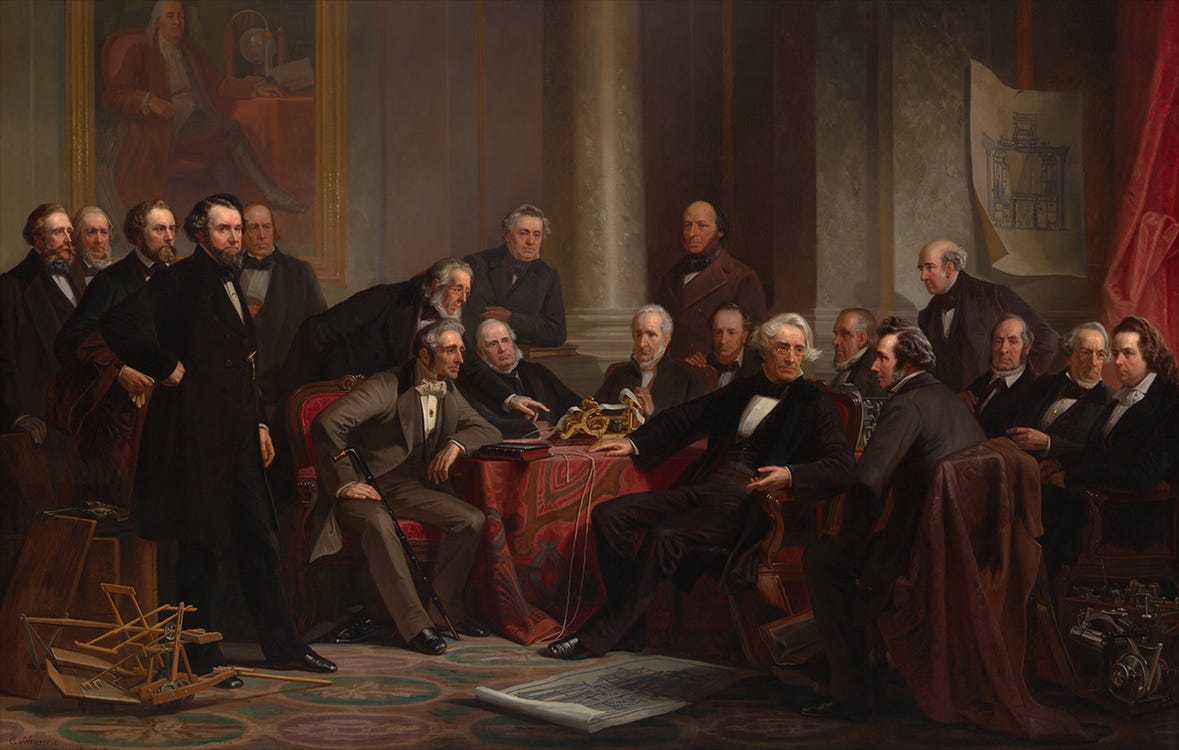
One of the challenges is so much fashion analysis was written for the dress of couture clothes for women. It generally just wasn’t very helpful for thinking about other forms of dressing, especially ones that don’t consider themselves to be fashion, like the suit. I needed a method of system of analysis, and couldn’t find one, so I had to make one. I’m hoping that is going to be a framework that other people feel like they can borrow. I’ve started using that in talks for the public, [and] I have found people really enjoy it. It gives people who have no grounding in fashion studies, a way to think about how to look at a painting, essentially.
Laura: This book concentrates on how the American revolution and American democracy affected men’s dress, but how did this play out in other countries? When I think of Britain and most of Europe, there was also this taking on of suits at around the same time.
Chloe: That was one of the big challenges from the beginning, as I couldn’t say Americans invented suits. It’s just not true. They were also being taken up in these other countries. I think, initially, a lot of my analysis was much more focused on the French Revolution, Anglomania story, because that’s so prevalent in all fashion histories. That’s the story of this period. It was really hard to let that go, because that just was how I learned this period.
There are a couple of things I’m like, “Oh, this has sparked a really good research project that I’m not going to do, but I hope somebody does.” One of them would be looking more at the influence that Benjamin Franklin and Thomas Jefferson had on French ideas of dressing. The story is so Anglomania, it’s all about England, but they were there, and they were so famous and fashionable.
Laura: I found your book a really an interesting perspective on the whole time period, and especially the early part of your 75 years, which we learn so much about in school, but it can feel rather one note.
Chloe: I also was really interested in pushing back against the British-centric fashion analysis. I think so much of fashion history just calls itself fashion history, and it doesn’t locate itself in a culture. I think that’s really problematic. I think it’s fine that it happened initially. That’s how all fields are born. I think that we need to do a better job as fashion historians of being clear about what’s unique to the fashion, locating yourself in a place, because place has culture, but also sumptuary laws and embargoes, and natural products and all of those kinds of things.
To show how there was cultural borrowing, certainly. I think so much of British fashion history was written as fashion history that didn’t identify itself as English fashion history, but then other English language historians started taking that on, and didn’t identify it as British fashion history, but just called it fashion history. I think it led to America not really having much of a fashion identity. Certainly, Americans were borrowing and buying from England and France and China and India, and other places, and didn’t produce almost any fashion media until the 1830s. That is a hard way to tell the story.
Laura: Having studied in England, yes, I would say that there’s an in-built belief in the superiority of Britain in all ways. That continues in their studies, and in even still in the way that they think about America, and in academia.
Chloe: Yes, I agree. One of the things that helped me see the possibility for this book was when you teach a fashion history course—which I did for 10 years, so it is baked into my understanding of fashion—you have 15 weeks to get through caveman times through 1900. When you’re teaching the history of fashion, you are really teaching not just the history of rich people, but the history of the richest people. You’re always having a different location. This is one of the other reasons why I’m annoyed by the lack of specificity of place, because I did it, I am part of the problem. It’s like ancient Egypt, ancient Greece and Rome, and then you do England, France, England, France, Spain, Holland, England, France, England, France, Hollywood. You only get to America when it’s the West Coast in the Hollywood Golden Age. Even if all you’re doing is tracing golden ages, the richest people in the Western world at any given time, they are always driving the fashion conversation.
Laura: What kind of feedback have you been getting? I know you’ve been doing a lot of public talks. How has everything been now that this is out in the world?
Chloe: Well, I’ll say before it came out in the world, the feedback that I was getting from peer reviewers that I found really interesting was, they all said, “This book could only have been written by a costume designer.” I just really loved that. I can’t see it, because I just know what I know. That was one of the things that was so great about my dissertation advisor, is she was so good at telling me what was missing. She was always telling me, “You know more than you’re writing down. You’ve got to tell us what you see, because we can’t see it.” It’s rewarding that people who are not designers, or even art historians are seeing that.
Laura: I think you did a really good job of explaining things like the specifics of the cloths, garments, and technologies, both to someone who hadn’t thought about them in a while and also for someone who’s coming in and is more just a history person.
Chloe: If I had a party, the idea would be that it would be people who would be historians of the Revolution, who don’t know anything about clothes or textiles. Then, fashion people who don’t know anything about political history, or the 18th century.
One of the things that I thought was interesting was… [how] looking at different types of sources led me to make different arguments in really confusing ways. It was only by triangulating different types of sources together that I could finally find my way forward. I got a fellowship at the Huntington in LA, which has this amazing collection of those big tailor’s plates that have all the figures on them. I looked at a hundred of those, and I had a panic attack. I was like, “There’s no black suits. Why are there no black suits? Were they not really wearing black suits? Oh my God, my whole argument is destroyed.” Then, I went back to the paintings, and if you look at the paintings, they’re only black suits. That’s a really weird disconnect there. Depending on which thing you look at, there’s a different story happening. Then, the story has to become about the stories that are being told.
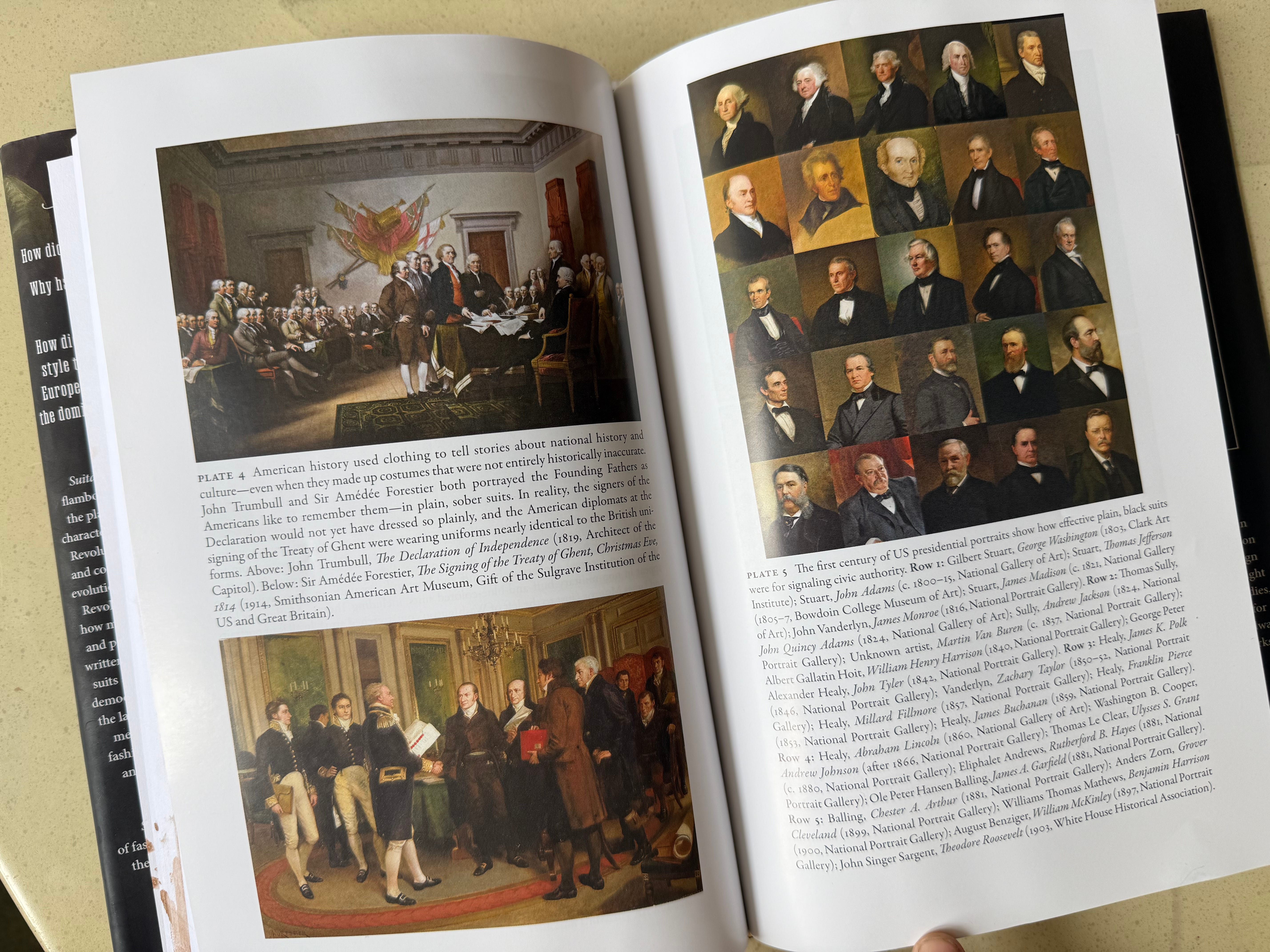
One of the things that was helpful was miniature paintings are actually quite different than the full-size paintings. That was another thing I think that I got out of being stuck inside, and not being able to go to museums as much during the pandemic, because if you go to a museum, generally, the miniatures aren’t out on display, or I look over them because they’re tiny, and I’m busy looking at the pictures up on the wall. Online, they’re all the same size. They have the same visual importance. I did all these databases for myself about like, “Here’s all this guy’s paintings. Oh, no, wait, these are miniatures. Oh, wait, what if I do different slides? This one is all full-size paintings, and this one’s miniatures. Whoa, there’s an interesting story here, where all the big ones are black, all black suits. Then, the miniature is like, that’s where the fashiony stuff is happening.” That’s interesting.
As far as the tailor’s plates are concerned, I finally was like, “Oh, it’s because they’re advertising.” They basically are sellers of cloth as much, as they’re sellers of making your clothes. They don’t need to advertise black suits because everybody knows what black wool looks like, but they’re always trying to push that new.
Laura: You already have a black suit, so let’s try and get you to buy something else.
Chloe: Exactly. Also, that period, I know the whole reason why all those plates were collected by the collector, is because they’re lithographs. That’s what he was interested in is the technology of lithography. They’re all hand painted. When you arere hand painting stuff, the opacity of different colors is really different. Black paint is so opaque; you can’t see through it. When you’re advertising suits, what you want to show are the style, the seam lines, and so it makes less sense to show them.
I think fashion is really challenging to study for a variety of reasons…. The sources are so unstable. A painting, you’ll say, “Oh, well, maybe they weren’t wearing that. Maybe the painter made it up.” The fashion plate, it’s like, “Well, that’s a fashion plate. You don’t know that everybody was actually wearing that.” In a pre-photography world, how do you trust your sources? Other fields have to verify their sources too. There’s this, I think, devaluing of fashion research because other fields will claim that fashion sources are unreliable. Being unstable and unreliable, I think are two different things. It doesn’t mean that you can’t use those sources. You just have to be careful about what the sources are telling you.
Laura: Did researching and writing this book change your ideas about suits?
Chloe: I say a little bit about that in the book, that my goal isn’t that we should get rid of suits. I love suits. One of the things that I find really interesting is the challenge of holding intention that it was such a cool idea that they had: The idea of this plain uniform being a symbol of American values and democracy. Women were doing the same thing [in terms of simplifying dress around the time of the American Revolution]. They just didn’t have any voting rights. Then their fashion changed 8,000 times after that, so we don’t see it in the same way. I don’t think we should get mad at anybody about that. We can still hold slaveholders accountable and say that they should have made voting accessible to women from the very beginning.
Also, it seems to have had some really gargantuan consequences in terms of, if you believe my argument that when men adopted suits, that fashion was extra devalued and associated with femininity and frivolity. Then, when suits are taken up around the globe as a symbol of democracy, which helped erase a lot of male traditional dress practices, which make much more sense for the climates where they’re actually living in, [this] also helped to make more extreme the difference between men and women in non-Western contexts when men adopted suits and women did not.
I feel like holding those two things in tension, in a way, is very similar to the kind of tension that political historians are asking us to hold too, that the Founding Fathers’ ideas of equality were really important and really world-building in terms of what they were reacting to. It’s hard, I think, sometimes to see that because we have really different ideas about what equality means to us, and they had a different definition of equality. Maybe that’s one of the things that this book can do, is give people just maybe a little bit more of a material way of grasping the challenge of holding those two truths at the same time.
Laura: There’s always so much more nuance than the flattened view that the media wants us to give us. What do you think we can learn from this Sartorial Revolution?
Chloe: For me, the first thing is just to be able to see suits. I don’t think we’ve been able to see them. I think they were cleverly invisibilized through their design. Whether or not that was intentional from the beginning or an accident, or the reason why it lasted for so long, I think there’s a couple of different reasons why that’s valuable, one of which is just on a social level, and the other is a little bit more academic of the ability to see.
One of the things that helped me come up with these ideas is thinking about all of those museum collections that are full of paintings of white men in black suits, and yet art history has no analysis of them as a genre. It’s just the suit is considered so natural. It’s just the state of being a modern man. Plainness is not neutral. It’s a choice. It’s always a choice to keep choosing. It is clear to me that adornment is the norm. Humans have been adorning themselves since humans were humans. The suit is a weird outlier. The people today who wear suits have disproportionately more money and power than everybody else does. There’s even more of a reason why we should be able to see it and point to it.
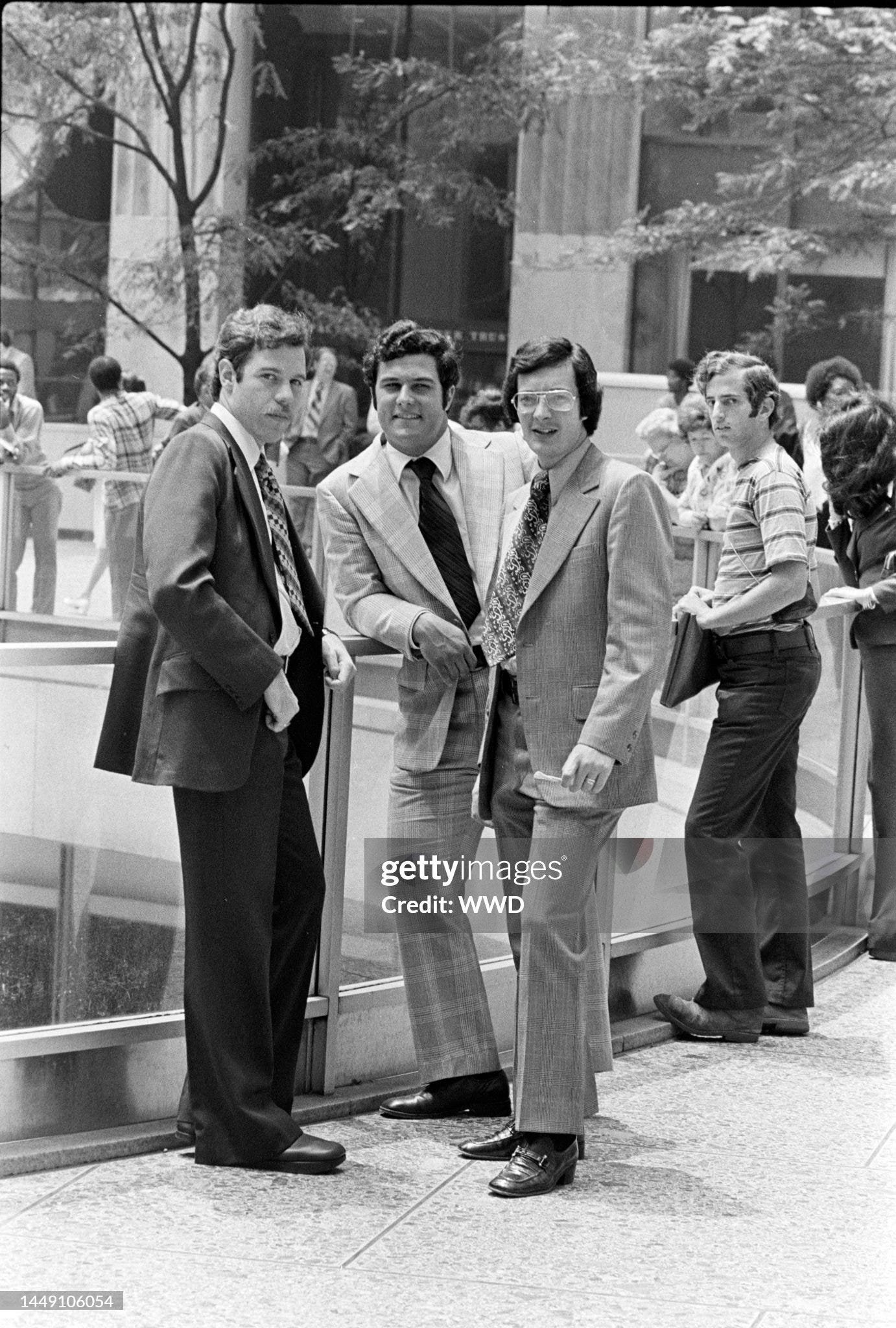
Laura: I’ve been working on a project for someone these last few weeks that has made me look through thousands of candid photographs taken around America in the 1970s. A lot of them are Wall Street and Midtown, and while reading your book, it made me think about this weird pocket of time that doesn’t fit within the rest of it, because the men in the suits, they’re not wearing dark suits; they’re plaid and have all of these things going on. It’s this weird moment where the “peacocks to penguins” went back to peacocks.
Chloe: They call it the Peacock Revolution for a reason. That is one of the pushbacks I often get is like, “What about the ‘70s?” My two responses to that are usually, look to the politicians. Also, the suit keeps winning. It just keeps coming back to it, even if we deviate from it in certain time periods or in certain ways.
I think even on an individual level, that happens, this idea that the sartorial glow up that a man should always have a suit in his closet so that at any moment he can take on the raiment of respectability and authority, whether that’s being the boss or going to a funeral or going to the opera, whatever it is. Anytime you want to be in charge or fancy or dependable, reliable, that the suit is always available to you to do that.
Laura: For your next projects, are you still planning to write about menswear or suits?
Chloe: This whole project started off as a history of tuxedos. That is a book that doesn’t exist and it really should. I have most of the research for it. It’s tricky. I’m ready to move on to other things. I want to find other big arguments like this book. I also really want to write that tuxedo book too. I don’t want to get pigeon-holed as just the suits person.
I’ve been writing these personal stories about being a dresser and a costume designer, and thinking about the performative nature of clothing and what it feels like to wear it and to put it on people. I feel like that’s a really under told part of the story. I’ve been thinking about it more in terms of theatrical costumes and the nature of celebrity, more through a theater perspective. The one that I really want to write eventually is a philosophy book, that goes back and rewrites fashion into different philosophers. We can’t be beings in the world without being dressed beings in the world.
Laura: I really enjoyed how your book, even though it’s about clothing, it’s about clothing through this historical lens, and through these economic and political and all these other lenses, which makes it feel a little more robust in a way than a lot of theory-based fashion scholarship.
Chloe: I had an interview with The Harvard Gazette. One of the things that she said, which I was so happy to hear, was that she really got the argument that fashion studies has been overlooked and undervalued, and it’s because of gender and it’s because of suits. I know I don’t have to make that argument to fashion people. Being able to make it to someone who has never really thought about fashion before, and to have them have a kind of a-ha moment. I think a lot of people, that’s the main comment is like, “Oh, I just never even thought of that before.” I was really gratified to hear that, that it is an argument that will be of interest to people beyond fashion scholars.
Fantastic interview and I never knew I'd be compelled to read about the history of menswear. Sign me up. Thank you both!